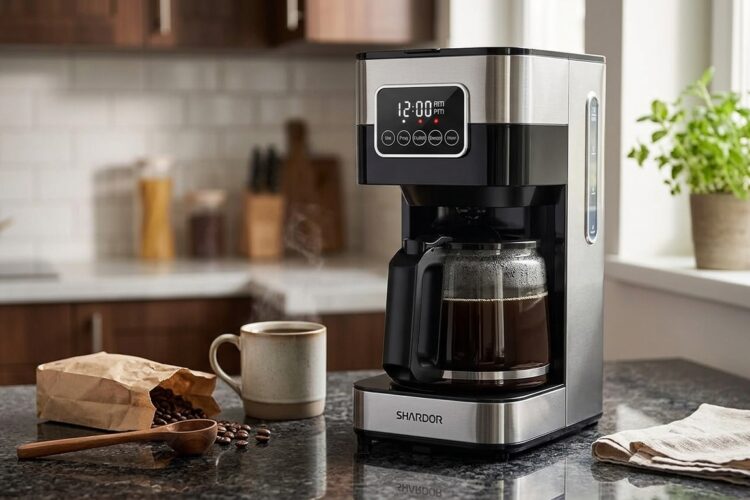
Few kitchen appliances get used as consistently as a drip coffee maker. It runs before the school drop-off, during a slow Sunday, in the break room before the first meeting, and sometimes all three on the same day. Because it works so quietly in the background of daily life, choosing one tends to be a decision people make quickly, and sometimes regret a little later when a feature they assumed was included turns out to be missing.
This guide looks at the SHARDOR 10-Cup Programmable Coffee Maker in a practical, informational way. It covers what the machine is designed to do, how its main features work in everyday terms, who might find it a sensible fit, and what to weigh before deciding. The goal is not to push anyone toward a purchase. It is to lay out the details so you can judge whether a machine like this matches the way you actually drink coffee.
A quick note on approach: everything here is based on the product’s listed specifications and on general knowledge of how drip coffee makers work. This article does not describe hands-on testing, and the product details mentioned should be confirmed on the official listing, since specifications and included accessories can change over time.
What Kind of Machine Is This?
The SHARDOR 10-Cup is a standard automatic drip coffee maker, the style most households in North America and many other regions recognize immediately. Water is poured into a reservoir, ground coffee goes into a filter basket, and heated water drips through the grounds into a carafe below. It is a straightforward design that has been refined over decades, and it remains popular because it is dependable, simple to learn, and capable of producing a full pot in one go.
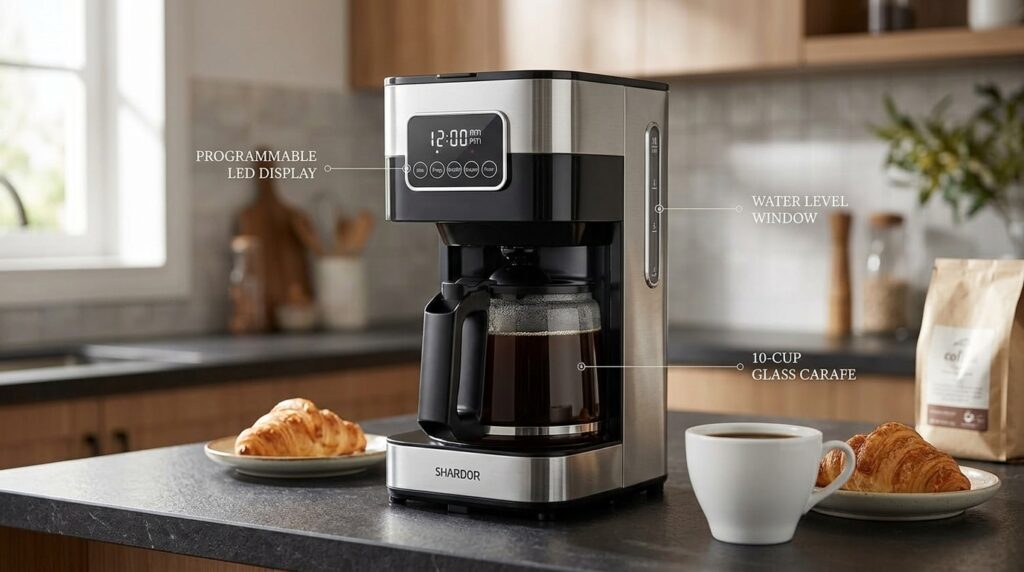
The model is described as having a 10-cup capacity, a programmable timer, a choice between regular and strong brew settings, an automatic shut-off function, and a permanent (reusable) filter. It comes in a silver finish. Each of those details shapes how the machine fits into a kitchen or office routine, so they are worth unpacking one at a time.
One small point about the “10-cup” label is useful before going further. In the coffee machine world, a “cup” is usually about five ounces, not the eight-ounce measure used in cooking or the larger mugs most people actually drink from. A 10-cup machine therefore produces roughly 50 ounces of coffee, which works out to around five or six standard mugs, depending on how big yours are. Knowing this up front prevents a common surprise.
Key Features Explained
Programmable Timer
The programmable function lets you set the machine to begin brewing at a specific time. The idea is simple: you load the water and grounds the night before, set the timer, and wake up to a fresh pot already finished or nearly so.
For people with predictable mornings, this can remove a small but real friction point. It also helps anyone who finds that the smell of brewing coffee is the gentlest alarm clock available. As with any timer-based appliance, it is worth confirming how the clock is set and whether the machine retains its settings after a power interruption. Those are the kinds of details usually found in the user manual.
Regular and Strong Brew Options
Two brew strength settings are listed: regular and strong. On most drip machines with a “strong” mode, the function typically slows the flow of water over the grounds or alters the brewing cycle so that extraction takes slightly longer. A longer contact time between water and coffee can produce a bolder, more concentrated flavor.
It helps to keep expectations realistic here. A strong setting is not the same as an espresso-style extraction, and the difference between modes tends to be moderate rather than dramatic. Variables like grind size, the amount of coffee used, and the freshness of the beans often influence the strength of the cup more than a single button does. Still, having the option means you can adjust the brew without changing your recipe, which is convenient when the household has different preferences or when you simply want a heavier cup on certain days.
Permanent Filter
The machine includes a reusable filter, which is usually a fine mesh basket made of metal or durable mesh material. The practical upside is that you do not need to keep buying paper filters, which reduces ongoing consumables and can mean less waste.
There are some trade-offs worth understanding. Mesh filters let more of the coffee’s natural oils through than paper does. Many people feel this gives the cup a fuller body and richer mouthfeel. Others prefer the cleaner, lighter taste that paper filtration produces. Mesh filters can also allow a small amount of very fine sediment into the pot, particularly with finer grinds. And because they are reusable, they need to be rinsed and cleaned after each use, or coffee oils can build up over time. If you prefer paper filters, check the product details to see whether the basket is compatible with standard sizes, since not all baskets accept them comfortably.
Auto Shut-Off
Automatic shut-off is a safety and energy-saving feature. After the coffee has been brewed and the warming period has gone on for a set time, the machine turns itself off. Anyone who has left the house and then wondered whether they switched off the coffee maker will see the appeal.
This feature does not replace good habits, but it provides a margin of comfort. Details such as the exact duration before shut-off should be verified in the product specifications, as they are not something to assume.
Capacity and Carafe
A 10-cup capacity suits households of several people, small gatherings, or office settings with a handful of coffee drinkers. If you tend to drink one or two mugs by yourself, the pot size could be more than you need, though many people simply pour the leftover into a thermos or accept that the second mug will be reheated later.
It is also worth noting what type of carafe is included. Glass carafes and thermal carafes behave differently: glass sits on a warming plate that keeps coffee hot but can gradually affect its flavor over a long period, while thermal carafes keep temperature without direct heat. Check the listing to see which style applies and how it handles heat retention.
Silver Finish and Design
The silver exterior is a neutral choice that tends to blend with stainless steel appliances and modern kitchens. Aesthetics are subjective, but a clean, simple design can make counter space feel less cluttered. Overall footprint and height are more practical considerations than color, and are discussed further below.
How It Can Be Used
A drip coffee maker is more versatile than it first appears. Here are several ways a machine like this one may fit into daily life.
Morning Routines at Home
The most obvious use is the daily pot. With the programmable timer, a household can set the machine the evening before and have coffee ready on waking. This is useful for shift workers, parents with early starts, or anyone who prefers not to fumble with appliances before they are fully awake.
Shared Households and Families
Where several people drink coffee at different strengths, a regular/strong option offers a little flexibility. One person might prefer a milder weekday brew, while another wants something more robust on weekends. A larger carafe also means that one brew can serve multiple people rather than requiring repeated single-serve cycles.
Small Offices and Workspaces
Home offices, small businesses, and shared workspaces often need something dependable and simple. A drip machine with a reusable filter reduces the need to restock paper filters, and the large capacity handles meeting-day demand. Auto shut-off is particularly appreciated in workplaces where machines can be forgotten at the end of the day.
Entertaining and Gatherings
When friends or relatives visit, brewing a full pot ahead of time is far easier than making individual cups. A 10-cup brew can serve a small dinner party’s after-meal coffee, a weekend brunch, or a holiday morning.
Beyond Plain Coffee
Some people use drip machines in creative ways, with a couple of cautions. Brewed coffee can serve as a base for homemade iced coffee, cold-brew-style drinks (when chilled), tiramisu, or coffee-based marinades and baking recipes. Some people also run hot water only, without grounds, for tea or instant beverages, though it is wise to follow the manufacturer’s guidance on what is appropriate for the machine and to thoroughly rinse the system afterward so flavors do not carry over.
Who It May Be Suitable For
No single machine fits everyone, but certain profiles tend to line up well with this style of coffee maker.
People who value simplicity. If you want a machine you can learn in a few minutes without menus, apps, or special pods, a conventional drip brewer is hard to beat.
Households that drink coffee in volume. Multiple drinkers or heavy daily consumption make a 10-cup carafe more practical than single-serve alternatives.
Those who prefer to avoid ongoing pod costs. Drip brewers use ground coffee, which gives you freedom to choose beans, roasts, and quantities without being tied to a particular pod system.
People who like to plan ahead. The timer is useful for anyone who sets up the night before.
Small office managers. A dependable, large-capacity machine with auto shut-off can suit a modest workplace.
Anyone interested in reducing paper filter use. The permanent filter appeals to people who want fewer disposables, as long as they are comfortable with regular rinsing and cleaning.
Important Things to Consider
Every appliance involves compromises. Thinking through the following points can help avoid disappointment.
Counter Space and Storage
Ten-cup machines are not tiny. Measure the space under your cabinets, especially if you plan to lift the lid or fill the reservoir while it is in place. Check the product’s listed dimensions rather than guessing from photos.
Cleaning and Maintenance
Reusable filters demand a bit more attention than disposable ones. Rinse the basket after each use and wash it thoroughly on a regular basis. Beyond that, mineral deposits from water can build up inside any drip machine over time. Periodic descaling, typically with a vinegar solution or a dedicated descaling product, as recommended by the manufacturer, helps maintain performance and flavor. Skipping this step is one of the most common reasons coffee makers start to brew slowly or taste off.
Water Quality
Coffee is mostly water, so the water you use matters. Hard water tends to leave scale faster, and strongly chlorinated tap water can affect taste. Filtered water is a simple upgrade for many households.
Flavor Expectations
Drip brewers produce a classic, balanced cup. They are not designed to replicate the pressure-based intensity of espresso or the very specific control that manual pour-over methods allow. If you are chasing precise temperature profiles, adjustable water flow, or specialty brewing techniques, a basic automatic machine may feel limiting. If you want a reliable everyday cup, it may be exactly right.
Noise and Brew Time
Drip machines gurgle and hiss while brewing. Most people find this normal, but if your kitchen is open to a sleeping area, it is something to keep in mind. Brew times for a full pot generally fall in the range of several minutes, and strong mode may extend it slightly.
Materials and Warranty
Look closely at the materials used for the carafe, the reservoir, and any parts in contact with hot water. Also check warranty and return terms on the official listing. These can vary and are worth reading before committing.
Reading Reviews Wisely
Customer feedback on retail platforms can be useful, but it is best read as a pattern rather than as individual verdicts. Look for recurring comments about durability, cleaning, and heat retention, and weigh them against your own priorities. Single dramatic opinions, positive or negative, rarely tell the whole story.
How This Category Compares to Other Coffee Machines
Rather than pitting specific brands against each other, it helps to compare general types of coffee makers and where each tends to shine.
Drip Machines vs. Single-Serve Pod Machines
Single-serve machines are fast and convenient for one cup at a time, with minimal cleanup. They typically rely on proprietary or compatible pods, which adds an ongoing cost and more packaging waste. Drip machines, by contrast, brew in batches and use ordinary ground coffee. They suit households that drink several cups, while pod machines suit people who value speed and variety for one.
Drip Machines vs. Espresso Machines
Espresso machines force hot water through finely ground coffee under pressure and can produce a concentrated shot, the foundation for lattes and cappuccinos. They take more skill, more equipment, and more space. A drip machine is a different tool altogether: easier, more forgiving, and geared toward filter-style coffee.
Drip Machines vs. French Press and Pour-Over
French press and manual pour-over methods give hands-on control and are popular among coffee enthusiasts. They require attention and time, and the results depend heavily on technique. An automatic drip machine trades some of that control for consistency and convenience.
Basic Drip vs. Thermal-Carafe or Smart Models
Some drip machines add insulated carafes, app connectivity, or advanced temperature control. These extras can be appealing, but they often come with a higher cost and added complexity. A programmable machine with straightforward controls occupies a comfortable middle ground for those who want convenience without extra layers of technology.
Tips for Getting the Most from a Drip Coffee Maker
A few general habits can improve results with almost any machine in this category.
- Measure rather than guess. A common starting point is about two tablespoons of ground coffee per six ounces of water, then adjust to taste.
- Use fresh, appropriately ground coffee. Medium grind generally suits drip brewers. Too fine can clog or over-extract, while too coarse can taste weak.
- Store beans properly. Keep them in an airtight container away from heat and light.
- Rinse the reusable filter every time. Left-over grounds and oils can turn rancid and flavor the next pot.
- Run a water-only cycle after descaling. This clears out any residue.
- Do not leave coffee sitting too long. Coffee tastes best shortly after brewing, so consider transferring leftovers to an insulated container.
- Experiment with strength. Try regular and strong settings with the same beans to see which you prefer before changing other variables.
Frequently Asked Questions
How much coffee does a 10-cup machine actually make?
Because coffee makers generally count a “cup” as about five ounces, a 10-cup unit yields around 50 ounces in total. That translates to roughly five or six standard mugs, depending on mug size.
Do I need paper filters with this machine?
The product is listed with a permanent filter, so paper filters are not required for basic use. Some people still prefer to use paper for a cleaner cup; whether that works with this specific basket should be confirmed in the product details or manual.
What does the strong brew setting do?
In general, strong settings alter the brewing process to allow longer contact between the water and the grounds, which can produce a bolder flavor. The effect is usually noticeable but modest, and grind size and coffee quantity play big roles too.
Can I schedule the machine to brew in advance?
Yes, the programmable timer is intended for exactly that. You prepare the water and grounds ahead of time, set the start time, and the machine begins brewing automatically.
Is auto shut-off a replacement for turning the machine off?
It is better thought of as a backup. It adds a layer of safety and helps conserve energy, but routinely switching off and unplugging appliances when you leave is still a sensible habit.
How often should I clean it?
Rinse the filter basket and carafe after each use, and descale periodically according to the manufacturer’s instructions, often every month or two depending on water hardness and frequency of use.
Will it suit an office?
For a small office or home workspace, a 10-cup capacity can work well. For larger teams, you might find that a single pot goes quickly, and a larger-capacity or multi-unit setup may be more practical.
Does the permanent filter affect taste?
It can. Mesh filters let more oils and a bit of fine sediment pass through, often resulting in a fuller-bodied cup. Paper filters tend to produce a cleaner, lighter one. Neither is objectively better; it comes down to preference.
What kind of coffee works best?
Medium-ground coffee is the standard recommendation for drip machines. Beyond that, roast level, origin, and freshness are all personal choices.
Where can I confirm the specifications?
Always check the official product listing and manual for current specifications, dimensions, warranty terms, and included components, since details can be updated.
Final Thoughts
The SHARDOR 10-Cup Programmable Coffee Maker belongs to a category of appliance that prizes reliability over novelty. Its listed features, including a timer, regular and strong brew modes, a reusable filter, and automatic shut-off, are the type of practical functions that fit naturally into busy mornings, shared households, and modest office environments. It is not designed to replicate the experience of an espresso bar or a hand-brewed pour-over, and that is not really its purpose.
The most useful way to evaluate any coffee maker is to start with your own habits. How many cups do you drink, and when? Do you want to plan ahead with a timer? Are you comfortable rinsing a reusable filter daily? How much counter space can you spare? Answering those questions will likely tell you more than any feature list can.