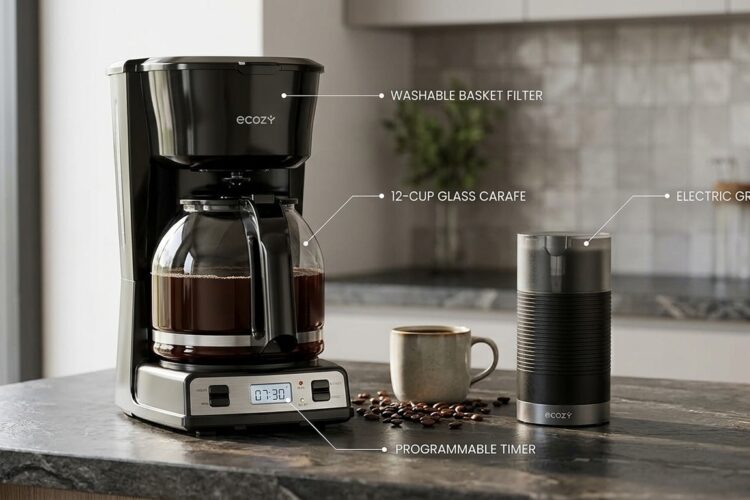
Anyone who has stood in a kitchen at 6:45 a.m., half awake, scooping pre-ground coffee from a bag that has been open for three weeks, has probably wondered whether there’s a better way. There is a middle path between buying a standalone burr grinder, a separate brewer, and the counter space both of them demand: the grind-and-brew machine, a single appliance that holds whole beans, grinds them, and brews the result into a carafe.
The Ecozy 12-Cup Drip Coffee Maker with Electric Coffee Grinder falls into this category. It pairs a programmable drip brewer with a built-in grinder, a washable basket filter, an auto shutoff function, and a no-drip design. This article walks through what those terms mean in practice, who tends to benefit from this style of machine, what trade-offs come with it, and how it compares to other ways of making coffee at home. It is meant as general education, so details are worth confirming against the manufacturer’s current specifications before any decision is made.
Why Whole Beans Matter in the First Place
Before looking at the machine itself, it helps to understand why grinder-equipped brewers exist at all.
Coffee begins to lose aroma shortly after it is ground. The surface area of the particles increases dramatically, which speeds up oxidation and the escape of volatile compounds responsible for much of what we perceive as flavor and smell. Whole beans, by contrast, keep those compounds locked in for longer. This is the main reason many coffee enthusiasts recommend grinding right before brewing.
A grind-and-brew machine takes that advice and builds it into the routine. Beans go in the night before, a button gets pressed or a schedule is set, and the grinding happens just ahead of brewing. The appeal is less about chasing perfection and more about removing steps without giving up the freshness benefit of whole beans.
Key Features of the Ecozy 12-Cup Grind-and-Brew Coffee Maker
Here are the main features associated with this model, explained in terms of what they do rather than how they’re marketed.
Built-In Electric Grinder
The defining feature is the integrated grinder. Rather than requiring a separate appliance, the machine has a bean hopper at the top. Whole beans are loaded, and the unit grinds them directly into the brew basket. Most machines in this category use a blade-style or compact grinding mechanism, which differs from the burr grinders found in dedicated, higher-end standalone units. Blade grinders chop beans, which can produce a less uniform particle size, while burr grinders crush beans between two surfaces for more consistency. For everyday drip coffee, many households find that acceptable, though people who care deeply about grind uniformity may want to keep this distinction in mind.
Many grind-and-brew machines also let users choose between using whole beans or pre-ground coffee. That flexibility is practical when you run out of beans or want to brew a decaf from a bag that’s already ground.
12-Cup Capacity
A 12-cup rating on a drip brewer usually refers to a measurement based on small servings of around five ounces each, not the size of a typical mug. In real terms, that means a full carafe might yield roughly six to eight standard mugs, depending on how large your mugs are. This makes it a sensible size for households of several people, for hosting guests, or for anyone who likes to pour a second cup later in the morning without brewing again.
If you mostly drink one cup a day, a carafe this large may be more than you need, and it’s something to weigh honestly.
Programmable Timer
The programmable function lets you set a time for the machine to start brewing automatically. Load water and beans the night before, set the timer, and the kitchen can smell like coffee by the time you walk in. For people with consistent morning schedules, this alone can be the feature that makes the machine worth having. It’s a small convenience, but one that repeats every single day.
Washable Basket Filter
Many drip brewers rely on disposable paper filters. This model includes a washable basket filter, typically a fine mesh insert that can be rinsed and reused. There are a few things worth knowing about reusable filters in general:
- They reduce ongoing paper waste and the need to restock filters.
- Metal or mesh filters allow more of the coffee’s natural oils through, which can give the cup a slightly fuller body compared with paper filtration.
- They may also let a bit more fine sediment into the cup, depending on the grind.
- They require rinsing after each use, and an occasional deeper clean to prevent oils from building up.
Some people prefer the cleaner, brighter cup that paper produces, and a few machines allow either approach. It comes down to taste and tolerance for cleanup.
Auto Shutoff
An auto shutoff function turns off the warming plate after a set period. This is mainly a safety and energy-saving feature. It addresses that familiar moment of leaving the house and wondering whether the coffee maker is still on. It also prevents coffee from sitting on a hot plate for hours and developing a burnt, bitter flavor. For anyone who is forgetful in the morning, or who simply values peace of mind, this is a worthwhile inclusion on any heated appliance.
No-Drip Design
The no-drip or drip-stop feature is meant to let you pull the carafe away mid-brew to pour a cup without coffee dripping onto the warming plate. It works through a valve mechanism that pauses the flow when the carafe is removed. It’s a small design detail, but anyone who has dealt with a burnt-on coffee puddle will understand why it gets mentioned.

How a Grind-and-Brew Machine Can Be Used
Most people will use this kind of appliance for the simple morning routine, but there are other ways to get value from it.
The Everyday Morning Routine
The most obvious use is the scheduled morning brew. Fill the reservoir, add beans to the hopper, set the timer, and go to bed. In the morning, the process has already run. For anyone tired of fumbling with scoops and filters before they’re fully awake, this can feel like a genuine quality-of-life improvement.
Brewing for Gatherings
A large-capacity carafe suits brunches, family visits, and small office gatherings. Since a single brew cycle can produce a decent volume, it cuts down the time spent brewing batch after batch. Pair it with a thermal carafe or a second pot if the coffee needs to stay hot for a long event, since a standard warming plate can only do so much before flavor begins to shift.
Experimenting With Different Beans
Because the machine handles whole beans, it’s an easy way to explore different roasts and origins. A lighter roast will taste distinctly different from a dark one, and a single-origin bean from Ethiopia will behave differently from a blend built around Brazilian or Colombian beans. Buying small bags from local roasters and rotating through them is an inexpensive way to learn what you actually enjoy.
Using Pre-Ground Coffee When Needed
If the machine supports a pre-ground option, it can serve double duty. This is helpful when you want to brew a different coffee than what’s in the hopper, or when you’re traveling with a pre-ground bag from a favorite roaster.
Iced Coffee Preparation
Drip coffee can be used as a base for iced coffee. One approach is to brew a slightly stronger batch, let it cool, and pour it over ice so the dilution doesn’t leave the drink tasting watery. Another is to brew a batch in the evening, refrigerate it, and have it ready for the next day.
Cleaning Reminders and Routine Care
While it’s not strictly a “use,” it’s worth treating maintenance as part of ownership. Grinders accumulate coffee oils and fine particles, and drip machines build up mineral scale over time, especially with hard water. A periodic descaling with a vinegar-and-water solution or a purpose-made descaling product is common advice. Always check the manufacturer’s instructions for what’s safe for a specific machine.
Who This Type of Coffee Maker May Be Suitable For
No single appliance suits everyone. These are some situations in which a grind-and-brew machine may make sense.
People who want freshness without extra steps. If you appreciate the idea of whole-bean coffee but don’t want to manage a separate grinder, an integrated unit reduces the number of tools involved.
Households with limited counter space. Combining two functions into one footprint can free up room in a smaller kitchen, though these machines are often taller than standard drip brewers, so measuring clearance under cabinets is wise.
Families or shared households. The larger carafe size is suited to situations in which several people drink coffee around the same time.
People with predictable schedules. The programmable timer works best when your mornings look similar from day to day.
Beginners moving beyond pre-ground coffee. For someone curious about whole beans but intimidated by manual brewing methods, this kind of machine is a gentle introduction.
People who value reducing paper waste. The washable filter appeals to those who prefer a reusable approach.
Important Things to Consider Before Choosing
An honest look at any appliance includes its limitations. Here are some factors worth thinking through.
Grinder Quality and Consistency
As mentioned, built-in grinders in all-in-one machines are generally designed for convenience rather than precision. If you’re particular about grind size, you may notice differences compared to a dedicated burr grinder. Some people are perfectly happy with the results, while others eventually pair a standalone grinder with a simpler brewer. It depends on how much you notice and how much you care.
Noise
Grinding coffee beans is loud. A machine that grinds automatically on a timer will make noise at the scheduled time, which matters if you share a home with light sleepers or a baby. It’s worth thinking about where the machine sits relative to bedrooms.
Cleaning Effort
More functions mean more parts to clean. The hopper, grinding chamber, filter basket, carafe, and water reservoir all need attention. Coffee oils and residue can build up in the grinder if neglected, and stale residue can affect the taste of fresh coffee. A grind-and-brew machine rewards a consistent cleaning habit.
Size and Weight
Because the grinder and hopper sit above the brew basket, these machines tend to be taller than conventional drip makers. Check the height against your cabinets before assuming it will fit in its usual spot.
Capacity vs. Your Real Habits
A 12-cup machine is convenient for groups, but brewing a full pot for one person leads to waste. Some people find that coffee left on a warming plate declines in quality fairly quickly. If you typically drink one or two cups, you may prefer a smaller machine or one with a brew-strength or small-batch setting.
Longevity and Warranty
Appliances that combine mechanical and heating components have more parts that can wear over time. Reading the manufacturer’s warranty terms and customer support information is a reasonable step with any such purchase.
Product Details Can Change
Specifications, included accessories, and features can vary between product listings and over time. Always confirm the details on the current product page rather than relying on any article, including this one.
Comparing Categories of Coffee Makers
Rather than comparing specific brands, it’s more useful to look at how grind-and-brew machines sit alongside other common approaches to making coffee at home.
Grind-and-Brew vs. Standard Drip Machines
A standard drip coffee maker is typically simpler, often lighter, and usually fits more easily under cabinets. It relies on pre-ground coffee or a separate grinder. The trade-off is a missing step: you handle the grinding yourself or accept the staleness that comes with pre-ground coffee. Grind-and-brew machines add convenience in exchange for added complexity and cleaning.
Grind-and-Brew vs. Single-Serve Pod Machines
Pod machines emphasize speed and minimal cleanup. They’re well suited to one-cup-at-a-time households. They also involve ongoing pod purchases and generate packaging waste unless reusable pods are used. Grind-and-brew machines offer more control over what beans go in and are better for brewing multiple servings at once, though they’re slower and less tidy.
Grind-and-Brew vs. Pour-Over and Manual Methods
Pour-over, French press, and AeroPress setups are popular with people who enjoy the ritual of coffee-making and want direct control over variables like water temperature, pouring speed, and brew time. They typically pair with a dedicated grinder. They reward attention and practice. A programmable machine suits a different priority: consistency and hands-off convenience.
Grind-and-Brew vs. Espresso Machines
Espresso machines make a different style of beverage altogether, built on high pressure and a much finer grind. They’re suited to lattes, cappuccinos, and straight shots. Drip coffee tends to be milder and larger in volume. These categories overlap less than people sometimes assume, and many households eventually own more than one.
Grind-and-Brew vs. Separate Grinder Plus Brewer
Pairing a quality burr grinder with a standard brewer generally offers more precision and room to upgrade each component independently. It also takes up more space and costs more overall, and it requires an extra step every morning. The all-in-one approach trades some of that refinement for simplicity.
Tips for Getting More Out of a Grind-and-Brew Machine
A few general practices tend to help with this style of brewer, regardless of the exact model.
- Store beans properly. Keep them in a cool, dark place in an airtight container, and consider loading only what you’ll use in a few days into the hopper rather than filling it to the top and leaving it for weeks.
- Use filtered water. Coffee is mostly water, and water quality noticeably affects taste. Filtered water can also reduce scale buildup.
- Measure rather than guess. A common starting ratio is about two tablespoons of coffee per six ounces of water, adjusted to taste. Weighing coffee with a kitchen scale offers even more consistency.
- Clean the grinder area regularly. Removing leftover grounds and oils keeps old flavors from carrying into new batches.
- Rinse the reusable filter every time. Dried coffee oils can turn rancid and affect taste.
- Descale periodically. How often depends on your water hardness and how often you brew.
- Adjust strength to preference. If the cup tastes weak, add more beans. If it’s bitter, try a coarser grind setting if available or reduce the amount.
Frequently Asked Questions
Does a grind-and-brew machine make better coffee than a regular drip machine?
It depends on what you mean by “better.” Grinding beans just before brewing generally helps preserve aroma and flavor compared with coffee that has been ground for weeks. However, the quality of the beans, the grind consistency, water quality, and the coffee-to-water ratio all play major roles as well. Freshness is one factor among several.
Can I use pre-ground coffee in this type of machine?
Many grind-and-brew machines support both whole beans and pre-ground coffee, but this varies by model. Check the product’s manual or listing to confirm how the machine handles pre-ground coffee and whether there’s a bypass for the grinder.
Is a washable filter better than paper?
Neither is universally better. Reusable filters reduce waste and let more coffee oils through, which some people enjoy for the fuller body. Paper filters absorb those oils and trap fine particles, producing a cleaner, lighter cup. Many people choose based on taste and how much cleaning they’re willing to do.
How loud is the grinding?
Coffee grinders in general are noisy, and built-in versions are no exception. The sound is brief, usually lasting under a minute, but it’s noticeable. If you plan to use the programmable timer, think about whether the noise will bother anyone nearby.
How do I clean the grinder?
Always follow the manufacturer’s instructions. Generally, this involves unplugging the machine, removing leftover beans and grounds, wiping the hopper and grinding chamber with a dry or barely damp cloth, and avoiding submerging electrical components. Some people use a small brush to remove stubborn particles.
What does the 12-cup rating really mean?
Coffee maker cup sizes are usually based on a five-ounce measure, so a 12-cup carafe holds around 60 ounces. A typical mug holds eight to twelve ounces, so you’ll get fewer full mugs than the number suggests.
Will it fit under my kitchen cabinets?
Grind-and-brew machines are typically taller than standard drip brewers because of the hopper. Measure the vertical space where you plan to put it, and compare it with the dimensions on the product listing, remembering to leave room to open the lid and add beans.
What does the auto shutoff do?
It turns off the heating element after a set period, which helps with safety and avoids overheated, bitter coffee. The exact timing varies by model, so check the product details for specifics.
How often should I descale it?
A common guideline is every one to three months, depending on how hard your water is and how frequently you brew. Machines with visible scale buildup or slower brewing times may need attention sooner. Your manual will provide the recommended method.
Is it suitable for a small household?
It can be, but the large carafe is best appreciated when several people drink coffee, or when you want leftovers for later. If you’re brewing for one, think about whether you’d waste coffee or find a full carafe more than you need.
Final Thoughts
Grind-and-brew machines occupy a particular niche. They aren’t aimed at coffee purists who obsess over grind size and extraction time, and they aren’t the simplest option for someone who only wants a quick cup. They suit people in between: those who appreciate the idea of fresher coffee, want a reliable morning routine, and prefer not to maintain a shelf full of equipment.
The Ecozy 12-Cup model brings together the usual elements of this category: an integrated grinder, a programmable timer, a reusable filter, auto shutoff, and a no-drip design. Whether those features line up with your habits depends on how many people you brew for, how much counter space you have, how sensitive you are to noise and cleaning requirements, and how much you value convenience over precision.
A reasonable approach is to think about your actual mornings rather than your ideal ones. If a timed, hands-off brew would genuinely smooth out your day, this kind of machine is worth a closer look. If you enjoy hands-on brewing rituals, a different setup may fit better.