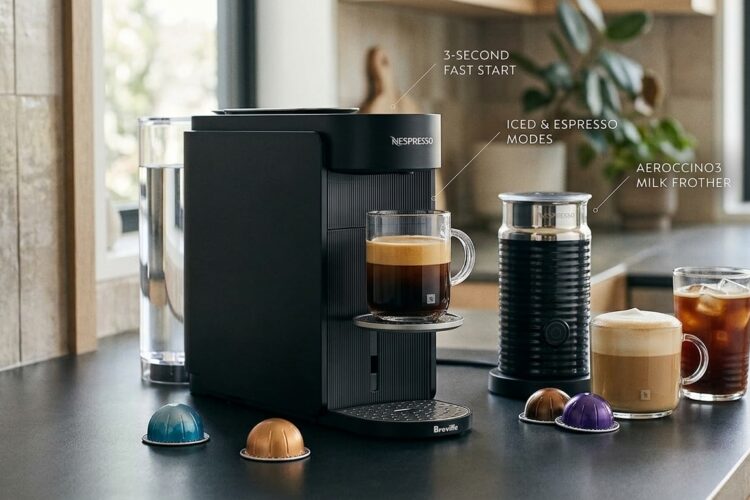
Anyone who has stood in front of a wall of coffee machines knows how quickly the options blur together. Drip brewers, pod systems, manual espresso machines, bean-to-cup units: each category promises something a little different, and the details tend to hide in the fine print. This guide looks at one specific option, the Nespresso Vertuo Up in Ink Black, a compact capsule machine made by Breville that is sold together with an Aeroccino3 milk frother.
The aim here isn’t to persuade you of anything. It’s to explain what the machine does, how its brewing approach differs from other styles, what daily use tends to involve, and what you might want to weigh before deciding. Product details change over time, so treat the specifications below as a general orientation and confirm the current ones on the official listing.
What Is the Nespresso Vertuo Up?
The Vertuo Up belongs to Nespresso’s Vertuo line, a capsule system that works differently from the company’s older Original line. The two lines use differently shaped capsules that are not interchangeable, a point worth remembering because it affects which capsules you can buy later.
Original-line machines rely on high-pressure extraction, similar in principle to a traditional espresso machine. The Vertuo line uses a method Nespresso calls Centrifusion. The capsule is spun at high speed while water is injected, and the spinning mixes the water and grounds as the drink is made. The machine reads a barcode printed around the rim of each capsule to decide how much water to use, what temperature to aim for, and how long to run the cycle. In practice, there are no settings to fiddle with. You insert a capsule, close the lid, and press the button.
This particular unit is made by Breville, an appliance company that manufactures several Nespresso machines under license. The version covered here comes with the Aeroccino3, a standalone milk frother that handles the milk side of things, so the bundle covers both black coffee and milk-based drinks.
Key Features Worth Knowing About
Barcode-Guided Brewing
The barcode system is the feature that shapes the whole experience. Each capsule carries a code that tells the machine how to prepare that specific coffee. A small espresso capsule gets one set of parameters, and a large mug-sized capsule gets another. The upside is simplicity: you don’t have to learn grind sizes or tamping pressure. The trade-off is that you work within the range of drinks Nespresso designs for the system, rather than adjusting each variable yourself.
Multiple Cup Sizes
The Vertuo line is generally organized around several serving sizes, running from a small espresso pour up to a large travel-mug-sized drink. Which sizes you can brew depends on the capsules you choose, since the machine adapts to what the barcode says. The sizes commonly associated with the line include espresso, double espresso, gran lungo, a standard mug size, and an extra-large option. If a particular volume matters to you, check the current capsule range, because Nespresso updates its lineup periodically.
Fast Heat-Up
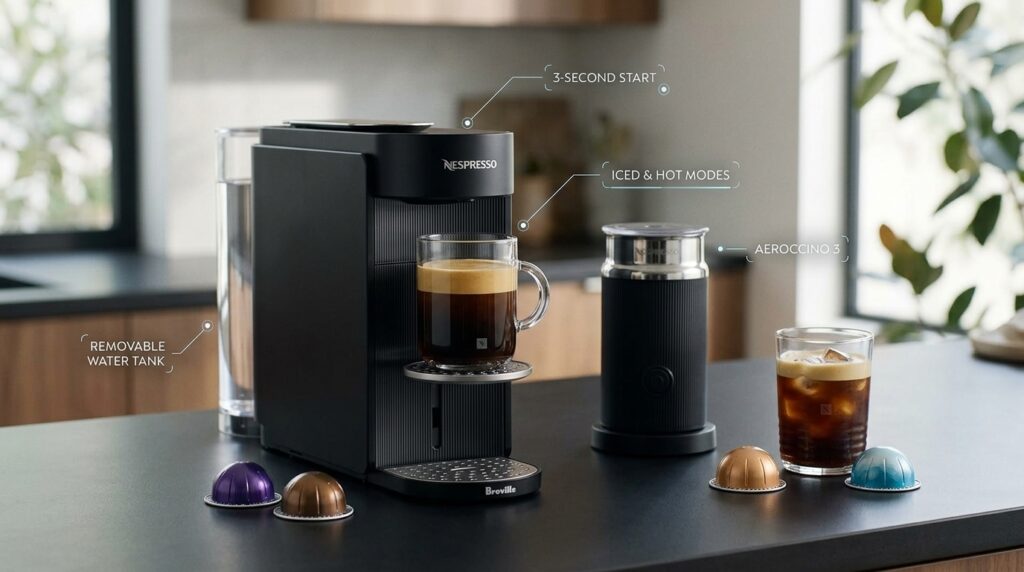
The product title mentions a three-second start. Machines in this category use compact heating systems designed to get water to temperature very quickly, so you aren’t waiting several minutes for a boiler. For anyone who makes coffee in a rushed morning window, quick readiness is a practical advantage. The exact timing can vary with conditions such as how long the machine has been idle, so it’s reasonable to read that figure as a design target rather than a guarantee for every cup.
Iced Mode
The listing also highlights an iced mode. The idea behind it is that coffee brewed over ice needs different handling from a regular hot cup, because ice dilutes the drink as it melts. Having a setting aimed at cold drinks is useful if you drink a lot of iced coffee, particularly in warmer months. Check the current user manual to see exactly how this mode is activated and what capsule types suit it best.
The Aeroccino3 Milk Frother
The Aeroccino3 is a small jug-style frother that sits on a base and heats and whisks milk with a magnetic whisk. It’s generally described as offering a few outputs: hot milk with a dense foam, hot milk with a lighter airy froth, and cold froth. That range lets you build cappuccinos, lattes, flat whites in spirit if not strictly in technique, and iced drinks that call for cold foam.
The frother runs separately from the coffee machine, so you can froth milk while your coffee brews, or use the frother alone for something like hot chocolate. It’s also fairly easy to clean, since the jug is small, though it benefits from a rinse right after use before milk dries on the surface.
Compact Footprint
Capsule machines are usually built to be space-conscious, and the Vertuo Up follows that pattern. A slim design suits small kitchens, dorm rooms, offices, and apartments where counter space is limited. That said, remember to account for the frother’s base and for storage of capsules, which can take up more room than you’d expect once you start stocking different varieties.
Removable Water Tank and Used Capsule Container
Like most machines in this family, there is a removable water reservoir and a container that collects used capsules. The container has a finite capacity, so it needs emptying periodically. Compared with a manual espresso setup, cleanup is minimal, but it isn’t zero.
How the Machine Can Be Used
A capsule machine is only as interesting as the drinks you end up making with it. Here are some ways people commonly use this type of setup, described as general ideas rather than reports of personal use.
The Straightforward Morning Cup
The simplest use is a single mug of coffee before work. Choose a mug-sized capsule, press the button, and you have a drink in roughly a minute or two. For households where several people want different strengths or flavors, capsules make this easy, since each person can pick their own without anyone needing to reconfigure the machine.
Espresso-Style Drinks
Smaller capsules produce a concentrated shot, topped with a layer of crema. It won’t be identical to the shot from a commercial pump machine, since the extraction method differs, but it works as a base for drinks that call for a strong coffee flavor. If you like espresso with a splash of cold water or a bit of milk, the small sizes are the natural starting point.
Milk-Based Drinks at Home
With the Aeroccino3, a latte or cappuccino at home becomes manageable without any steam wand technique. Brew a coffee, froth your milk, and combine. Whole milk typically foams most reliably, but many people also experiment with oat, almond, or soy drinks. Results with plant-based milks vary quite a bit between brands, so a bit of testing is usually needed to find one that foams well.
Iced Coffee and Cold Foam Drinks
The iced setting and the frother’s cold option open up a range of warm-weather drinks. A basic version involves filling a glass with ice, brewing over it, and adding a splash of milk. A more elaborate one tops the glass with cold foam and perhaps a syrup or a dusting of cocoa. Because the frother makes cold foam, it can stand in for equipment you might otherwise need to buy separately.
Hot Chocolate and Other Non-Coffee Uses
The frother is not limited to coffee. Warm milk with cocoa powder or chocolate flakes is a popular use, as is frothing milk for chai or matcha preparations. If you have children or guests who don’t drink coffee, that flexibility is handy.
Entertaining
When friends come over, the machine’s speed and simplicity can help. You can put out a few capsule varieties, let guests choose, and make each drink in turn without turning the kitchen into a café. Having a frother on hand also means dessert drinks, like an affogato-style pairing with a small espresso poured over ice cream, are easy to improvise.
Who It May Be Suitable For
No machine is right for everyone, and capsule systems in particular attract fans and skeptics in roughly equal measure. These are the sorts of situations where this kind of product tends to make sense.
People who value convenience. If your priority is a decent cup with minimal steps and almost no cleanup, a capsule system fits that goal well. There’s no grinding, dosing, or tamping, and no portafilter to wash.
Small-space households. Apartment dwellers, students, and people with limited counter room often prefer compact machines. This one is designed with that in mind.
Households with varied tastes. Where one person wants a mild morning mug and another wants a strong espresso, capsules let everyone customize without a learning curve.
Beginners. Someone who is curious about coffee but doesn’t want to invest time in learning espresso technique can use a system like this as a low-effort starting point.
Milk-drink fans. Because the frother is part of the bundle, those who mostly drink lattes and cappuccinos get both pieces in one purchase rather than hunting for a separate frother.
People who want fast, occasional coffee. For offices, guest rooms, or secondary kitchens where the machine is used a few times a day, a quick-start capsule machine can make more sense than a larger setup that needs warming and maintenance.
Important Things to Consider
A fair look at any product includes the less glamorous points. These are worth thinking over before deciding.
Capsule Ongoing Cost and Availability
Capsule systems involve a recurring purchase. Every cup uses a capsule, and the per-cup cost is typically higher than brewing from bulk ground coffee or beans. How much that matters depends on how often you drink coffee. A person who has one cup a day will experience this very differently from a household that goes through ten. Nespresso sells capsules through its own channels and some retailers, and availability can differ by region, so it’s worth checking how easy they are to obtain where you live.
Capsule Compatibility
The Vertuo line uses its own capsule format. Original-line capsules do not fit it. Some third-party manufacturers produce compatible capsules, but compatibility, quality, and warranty implications vary, so read the manufacturer’s guidance if you’re considering them.
Environmental Considerations
Single-use capsules raise understandable concerns about waste. Nespresso runs a recycling program in many regions, and the capsules are made of aluminum or plastic depending on the line, but the practicality of recycling depends on local collection options and how consistently people use them. If waste is a major concern for you, it’s worth reading the current recycling details for your area before settling on a capsule-based system.
Flavor Profile Differences
The Centrifusion approach produces a coffee that many describe as smooth, with a layer of foam on top, but it is not a traditional espresso extraction. Coffee enthusiasts who enjoy dialing in grind size, dose, and pressure may find a closed capsule system limiting. Taste is subjective, and the only way to know whether the results suit you is to try the coffee itself, perhaps by sampling capsules before committing to a large order.
Limited Control
The same simplicity that makes the machine approachable also restricts manual adjustment. You can choose among capsules and cup sizes, but you can’t tweak parameters the way you can on a semi-automatic espresso machine.
Milk Frother Care
The Aeroccino3 needs rinsing soon after use, because dried milk is harder to remove. Most people find it quick to clean, but it’s one more small task to build into a routine. Check the manual for guidance on whether any parts are dishwasher-safe, as this can differ between models and revisions.
Descaling and Maintenance
Even compact machines need occasional descaling, particularly if your tap water is hard. Skipping it can affect performance over time. The manufacturer provides descaling instructions and specific products, and following those guidelines helps keep the machine in good condition.
Warranty and Support
Since this machine is manufactured by Breville but sold under the Nespresso name, it’s sensible to read the warranty terms and note which company handles service. Policies can vary by region and by seller.
Comparing General Categories of Coffee Makers
Rather than pitting specific brands against one another, it’s more useful to look at how this type of machine sits among the broader categories of home coffee equipment. Each category has genuine strengths.
Capsule Machines (Like the Vertuo Up)
Strengths: Fast, simple, consistent, minimal cleanup, compact, wide drink variety through different capsules.
Considerations: Ongoing capsule purchases, less manual control, waste from capsules.
Drip Coffee Makers
Strengths: Good for making multiple cups at once, familiar and inexpensive to run per cup, works with ordinary ground coffee.
Considerations: Not designed for espresso-style drinks, less compact in some cases, brewing a single cup may feel wasteful or slow depending on the model.
Pod Machines Using Other Formats
Strengths: Often very easy to use, with wide availability of pods in grocery stores.
Considerations: Quality and flavor profile vary by system, and, like all pod formats, the per-cup cost and waste issues apply.
Semi-Automatic Espresso Machines
Strengths: Allow real control over grind, dose, and extraction, capable of excellent espresso and proper milk steaming for those who enjoy the craft.
Considerations: Steeper learning curve, more cleaning, often a higher up-front investment including a separate grinder, and more time per drink.
Bean-to-Cup Automatic Machines
Strengths: Grind and brew fresh beans at the touch of a button, often with built-in milk systems.
Considerations: Typically larger and more expensive, with more internal parts to maintain.
Manual Methods (French Press, Pour-Over, Moka Pot, AeroPress)
Strengths: Inexpensive, portable, rewarding for people who enjoy the ritual, and capable of excellent flavor.
Considerations: Require time and attention, and each method has its own learning curve.
None of these categories is universally better. The right choice depends on how much time you want to spend, how much coffee you drink, how much counter space you have, and how much you enjoy the process itself. A capsule machine tends to suit people who weigh convenience heavily, while manual and semi-automatic approaches suit those who treat coffee as a hobby.
Tips for Getting More from a Machine Like This
These are general suggestions drawn from standard manufacturer guidance and common coffee practice, not from personal testing.
Use fresh, filtered water if your tap water is hard or has a strong taste. Water makes up the bulk of the cup, so its quality shows through. It also helps reduce scale buildup.
Warm your cup first. Rinsing a ceramic mug with hot water before brewing helps your drink stay warm longer.
Match milk to the drink. Whole milk tends to give a thicker foam, while lighter milks produce airier results. Experiment with small quantities to see what you like.
Don’t overfill the frother. Most milk frothers have maximum and minimum fill lines. Staying within them gives better foam and avoids overflow.
Run the cleaning routine regularly. Follow the manufacturer’s recommendations for rinsing and descaling so the machine continues to perform consistently.
Try capsules in small batches. Sampler packs, where available, let you test different intensities and flavors without committing to a large quantity.
Store capsules in a cool, dry place. Keeping them out of direct sunlight and moisture is a simple way to protect them.
Frequently Asked Questions
Is the Nespresso Vertuo Up compatible with Nespresso Original capsules?
No. The Vertuo line uses a different capsule design and a barcode-based system, so Original-line capsules don’t fit. Always confirm that capsules are labeled for the Vertuo line before buying.
Does it make real espresso?
It produces a concentrated, small-volume coffee that is often called espresso within the Nespresso system. However, the extraction method differs from traditional high-pressure espresso machines, so the result has its own character. Whether that counts as “real” espresso is partly a matter of definition and partly of taste.
Can I make lattes and cappuccinos?
Yes, with the included Aeroccino3 frother. You brew the coffee, froth the milk separately, and combine them in your cup. The frother offers hot and cold options, so it supports both traditional and iced milk drinks.
Does the frother work with plant-based milks?
It can, but results vary depending on the type and brand. Some oat, soy, and almond beverages foam better than others, especially those labeled as suitable for frothing. A bit of experimentation is usually needed.
How long does it take to warm up?
The product title refers to a three-second start. Machines of this kind use fast-heating systems, but real-world timing can vary with conditions. Refer to the user manual for details on heat-up behavior.
How do I use the iced mode?
The details depend on the machine’s current firmware and manual, so it’s best to consult the official instructions. Generally, iced settings are meant to be used with ice-filled glasses so the coffee is brewed to compensate for melting.
How often should I descale it?
Descaling frequency depends on water hardness and how often you use the machine. The manufacturer’s manual provides recommended intervals and procedures, and many machines show a reminder when descaling is due.
Can I recycle the capsules?
Nespresso operates recycling programs in many countries, but availability depends on where you live. Check Nespresso’s website for current collection options in your area.
Is it a good fit for an office or shared space?
It can be, particularly for small offices where several people want different drinks. The main consideration is capsule volume. If many cups are made each day, ongoing capsule use and the used-capsule container’s capacity are worth planning for.
Can I use it without milk?
Absolutely. The frother is a separate unit, so the coffee machine works perfectly well on its own for black coffee and espresso-style drinks.
What should I check before choosing this model?
Look at the current listing for exact specifications, included accessories, warranty information, and seller details. Reading the user manual, which is typically available online, can also clear up questions about operation and maintenance.
Final Thoughts
The Nespresso Vertuo Up with Aeroccino3 occupies a clear niche: a compact, quick, low-effort way to make a range of coffee and milk-based drinks at home. Its barcode-driven system removes most of the guesswork, and the included frother extends the range from plain coffee to lattes, cold foam drinks, and hot chocolate.
At the same time, it comes with the usual trade-offs of capsule systems. There is a recurring cost per cup, a proprietary capsule format, some environmental questions, and less hands-on control than you’d get with a manual or semi-automatic setup. For people who prize convenience and variety, those trade-offs may be perfectly acceptable. For those who enjoy the craft of coffee-making, another category may fit better.
The most useful approach is to be honest about your own habits: how many cups you drink, how much time you want to spend, and what kind of coffee you enjoy. Once you know that, the decision usually becomes much clearer.