Anyone who has tried to set up a home coffee corner knows how quickly it grows. First there’s a grinder, then a machine, then a tamper, a milk pitcher, a scale, and maybe a separate brewer for the days when an espresso shot isn’t what you’re after. Counter space disappears, and so does the patience of whoever shares the kitchen.
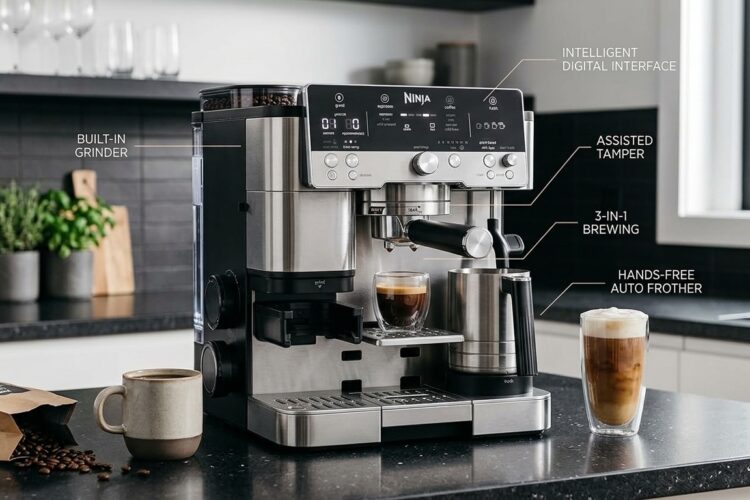
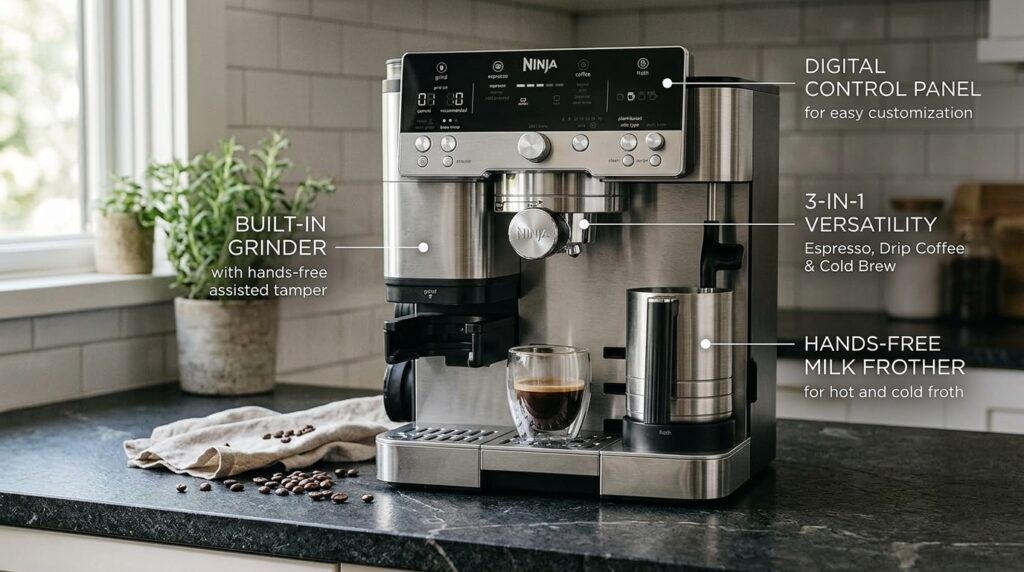
The Ninja Luxe Café Premier is built around the idea that much of that clutter can be consolidated. It combines espresso, drip coffee, and cold brew in a single appliance, and it adds a built-in grinder, an assisted tamper, and a hands-free milk frother. Whether that combination makes sense for a given household depends on habits, space, and expectations, so this guide walks through what the machine is designed to do, how people might use it, and what to think about before deciding.
This is an informational overview based on the product’s listed specifications and general knowledge of home coffee equipment. It is not a hands-on review, and the details are worth confirming against the current listing before any decision.
What Is the Ninja Luxe Café Premier?
The Luxe Café Premier is a countertop coffee system from Ninja, a brand best known for kitchen appliances like blenders, air fryers, and multi-cookers. The “3-in-1” label refers to its three brewing styles: espresso, drip-style coffee, and cold brew. Rather than treating these as separate categories that each need their own device, it puts them behind one interface.
What sets it apart from many multi-function brewers is how much of the espresso workflow it tries to automate. Espresso has a reputation for being finicky. Grind size, dose, tamping pressure, and milk texture all influence the result, and each one has a learning curve. This machine addresses several of those steps with built-in components: a grinder, an assisted tamper, and a frothing system that works without someone holding a pitcher.
Key Features Explained
Built-In Grinder
Freshly ground beans are one of the simplest ways to improve a cup of coffee, since ground coffee loses aroma compounds quickly once exposed to air. A grinder built into the machine means whole beans can go in the hopper and be ground as needed, without a separate countertop grinder and the cleanup that comes with it.
For espresso, grind consistency matters a great deal. A built-in grinder is typically matched to the brewing system, which can reduce guesswork. The trade-off is that integrated grinders generally offer fewer adjustment options than standalone ones, so people who like to fine-tune every variable may find the range limited. Checking the listing for the number of grind settings is a sensible step.
Assisted Tamper
Tamping is the step where ground coffee is compressed into the portafilter before brewing. Too light and water rushes through unevenly; too heavy or crooked and the extraction suffers. Beginners often struggle with this because there is no obvious feedback telling you whether you did it well.
An assisted tamper takes over part of that job by applying pressure in a more controlled way. For someone new to espresso, this removes one of the more intimidating variables. For someone experienced with manual tamping, it may feel like a loss of control, though it does provide repeatability from one cup to the next.
Hands-Free Milk Frother
Milk-based drinks like lattes and cappuccinos depend on well-textured milk, which usually means learning to steam it with a wand while managing temperature and foam at the same time. A hands-free frother is meant to automate that process, so milk can be heated and aerated while you do something else, such as prepare your cup or tidy up.
This is helpful for busy mornings and for people who don’t want to invest time mastering steaming technique. Results with automated frothers can vary depending on the type of milk used. Dairy milk, oat, almond, and other alternatives all behave differently when heated and aerated, so it’s reasonable to expect some experimentation.
Three Brewing Styles in One Unit
- Espresso: A concentrated shot that serves as the base for lattes, cappuccinos, Americanos, and similar drinks, or can be enjoyed on its own.
- Drip coffee: A more traditional, larger-volume cup, useful for people who drink coffee slowly or prefer a milder profile.
- Cold brew: A smooth, lower-acidity style steeped or brewed cold, popular for iced drinks, especially in warm weather.
Having all three in one machine appeals to households where preferences differ. One person might want a flat white, another a large mug of regular coffee, and a third an iced option for the afternoon.
How It Can Be Used
Everyday Morning Routine
For a typical weekday, the appeal is speed and simplicity. Add beans, choose a style, and let the machine handle grinding and brewing. Because several steps are automated, the process can fit into a short morning window without needing the focus that manual espresso demands.
Milk-Based Café Drinks at Home
People who regularly buy lattes or cappuccinos out may be drawn to the idea of making similar drinks at home. With espresso and automated milk frothing in the same unit, a few common drinks become possible:
- Latte: A single or double shot topped with steamed, lightly foamed milk.
- Cappuccino: More foam and a stronger espresso presence.
- Flat white: Espresso with a thinner layer of microfoam, if the frother’s output allows for it.
- Americano: Espresso diluted with hot water, a good bridge between espresso and drip coffee.
- Iced latte: Espresso poured over ice and milk, a warm-weather favorite.
Entertaining and Gatherings
Hosting a brunch or small get-together is easier when one machine can produce different styles. Drip coffee can serve a group, while espresso drinks cover requests for something more specialized. Cold brew can be prepared ahead of time and kept chilled, which spreads the workload.
Cold Brew Preparation
Cold brew has become a staple for many coffee drinkers, but making it traditionally means steeping grounds for many hours and then filtering them. A machine that includes a cold brew function can simplify that process. People who enjoy iced coffee through the summer months may find this one of the more practical features, although it’s worth checking how the machine’s cold brew method works and how long it takes.
Experimenting With Beans
An integrated grinder also encourages exploring different beans. Light roasts, dark roasts, single-origin coffees, and blends all taste distinct, and having fresh grinding built in makes the differences easier to notice. Beginners often start with a medium roast, since it tends to be forgiving, and then branch out.
Who It May Be Suitable For
No appliance fits everyone, but certain situations line up well with this type of machine.
People new to espresso. The assisted tamper and automated frothing reduce the technical learning curve, which can make home espresso less intimidating.
Households with mixed preferences. When one person prefers espresso drinks, another wants standard coffee, and someone else likes cold brew, a multi-style machine can cover everyone without separate devices.
Small kitchens or limited counter space. Consolidating a grinder, brewer, and frother into one footprint can save room, though the machine itself is not tiny, so measuring beforehand is wise.
Busy professionals and parents. Automation helps when time and attention are limited.
Those replacing multiple older appliances. If a drip machine and a separate grinder are nearing the end of their lives, a combined unit might be a logical upgrade.
Hobbyists who want convenience. Some people enjoy coffee but don’t want it to become a time-consuming pursuit. A semi-automated approach suits that mindset.
Important Things to Consider
A balanced look means acknowledging where this kind of machine may not be the right fit.
Counter Space and Weight
All-in-one machines tend to be larger than a single-purpose brewer. Check the dimensions in the product listing, including the clearance needed above the machine for filling the water reservoir or bean hopper, especially if it will sit under a cabinet.
Learning Curve and Control
Automation helps beginners, but it can limit manual adjustment. Enthusiasts who like controlling dose, grind, tamp, and extraction time individually may prefer a machine with more hands-on features. It’s worth reading the specifications to see what can and can’t be adjusted.
Cleaning and Maintenance
Any machine with a grinder, milk system, and multiple brewing paths has more parts to keep clean. Milk residue in particular needs regular attention to avoid buildup and odor. Descaling is also a normal part of owning an espresso machine, especially in areas with hard water. Reviewing the manufacturer’s care instructions before purchase gives a realistic sense of the upkeep involved.
Consumables and Ongoing Costs
Beans, filters, descaling solution, and water filters (if applicable) are ongoing needs. Using freshly roasted beans improves flavor but adds to the recurring expense compared with pre-ground coffee.
Noise
Built-in grinders and pumps produce sound. If the machine will be used early in the morning in a shared living space, it’s reasonable to consider that.
Milk Frothing Variability
Automated frothing is convenient, but results depend on milk type, temperature, and freshness. Expect some adjustment if you use plant-based milks.
Warranty and Support
Looking at the warranty terms and available customer support information provides peace of mind. Details can change, so the current listing is the best source.
Realistic Expectations
Home machines can produce very good drinks, but results will differ from those made by trained baristas using commercial equipment. Quality is also shaped by bean freshness, water quality, and cleanliness, not just the machine.
Comparing General Categories of Coffee Equipment
Choosing a coffee setup often comes down to picking the right category rather than the right model. Here is how an all-in-one machine like this one sits among common alternatives.
All-in-One Multi-Style Machines
These combine several brewing methods and often include grinders and frothers. They favor convenience and variety. The compromise is that each function may not go as deep as a dedicated device in its own category, and the unit takes more space than a single brewer.
Traditional Semi-Automatic Espresso Machines
These offer more manual involvement. Users control grinding, dosing, tamping, and sometimes extraction time. They reward practice and appeal to people who enjoy the craft. They also usually require a separate grinder, adding cost and counter footprint, and they have a steeper learning curve.
Super-Automatic Espresso Machines
These handle nearly everything at the push of a button, from grinding to brewing. They are very convenient but typically offer fewer opportunities for hands-on adjustment, and some people find the espresso character different from semi-manual methods.
Capsule and Pod Machines
Pod systems are fast, clean, and consistent, which suits people who prioritize simplicity. The trade-offs include reliance on a specific pod format, ongoing pod purchases, and less variety in fresh-bean exploration.
Standard Drip Coffee Makers
These are simple, familiar, and well suited to making larger quantities. They don’t make espresso, so they’re a different tool for a different purpose.
Dedicated Cold Brew Systems
Standalone cold brew makers and pitchers are inexpensive and effective for steeping coffee, though they require advance planning and a bit of cleanup. A machine with a cold brew function folds that task into a broader appliance.
No category is universally better than another. The right pick depends on how much time you want to spend, how much space you have, and how you like your coffee.
Tips for Getting Better Results From Any Espresso Machine
Even with automation, a few habits make a noticeable difference:
- Use fresh beans. Look for a roast date on the bag and aim to use the beans within a few weeks of that date.
- Store beans properly. Keep them in an airtight container away from heat and direct light rather than leaving a large quantity in the hopper for weeks.
- Mind your water. Very hard or heavily chlorinated water can affect taste and speed up scale buildup. Filtered water often helps.
- Preheat when possible. Warming the cup keeps drinks hotter for longer.
- Clean regularly. Rinse removable parts, wipe the frother, and follow descaling schedules. A clean machine tastes better and lasts longer.
- Adjust one variable at a time. If a shot tastes too sharp or too bitter, change a single setting, such as the grind or the dose, and taste again before changing something else.
- Try different milk. Whole milk generally foams most easily, while barista-style plant milks are formulated to work better with steam.
Frequently Asked Questions
Does this machine make real espresso?
It’s designed to produce espresso-style shots using pressurized brewing, which is what distinguishes espresso from standard drip coffee. As with any home machine, results depend on the beans, grind, and technique, even when parts of the process are automated.
Can I use pre-ground coffee?
Many machines with built-in grinders also allow pre-ground coffee, but this varies by model. The product listing and manual are the right places to confirm whether a bypass option exists.
Is the milk frother suitable for plant-based milks?
Frothers generally work with a range of milks, but outcomes differ. Oat and soy blends designed for steaming tend to perform better than thinner almond or rice varieties. Some trial and error is normal.
How difficult is cleaning?
Plan for routine rinsing of removable parts, regular milk system cleaning, and periodic descaling. The effort is comparable to other machines of this type, but it’s a real commitment worth factoring in.
Is it suitable for beginners?
The assisted tamper and hands-free frothing are aimed at lowering the barrier to entry. That said, beginners should still expect to experiment with beans and settings to find what they like.
Can it make iced drinks?
Cold brew and espresso over ice are both common approaches for iced drinks. Check how the cold brew function works, including timing and capacity, to make sure it fits your routine.
How much counter space does it need?
All-in-one units are usually larger than a basic coffee maker. Measure your available space, including height clearance, and compare it with the listed dimensions.
Will it replace a café visit entirely?
For many people it can reduce how often they buy coffee out, but it’s best viewed as a convenient home option rather than an exact replica of a professional café setup.
Does it need special maintenance?
Like other espresso machines, it benefits from regular cleaning and descaling. The manufacturer’s guide provides the recommended schedule and products.
Final Thoughts
The Ninja Luxe Café Premier reflects a broader trend in home coffee: bringing café-style variety into a single appliance without demanding a barista’s skill set. Its combination of a built-in grinder, assisted tamping, automated milk frothing, and three brewing styles speaks to people who want flexibility and convenience more than total manual control.
It isn’t the answer for everyone. Enthusiasts who enjoy dialing in every variable, people with very limited counter space, or those who only drink one style of coffee may be better served by a different type of equipment. But for households with varied tastes, newcomers to espresso, and anyone looking to consolidate a collection of gadgets, it’s a category worth understanding.
Before deciding, it helps to think through how you actually drink coffee day to day, how much time you’re willing to spend on cleaning, and how much space you can dedicate. Those practical questions usually matter more than any single feature on a spec sheet.